Two Quid, Three Villages, One Moving Window: The Rural Bus Is Winter’s Best Cinema
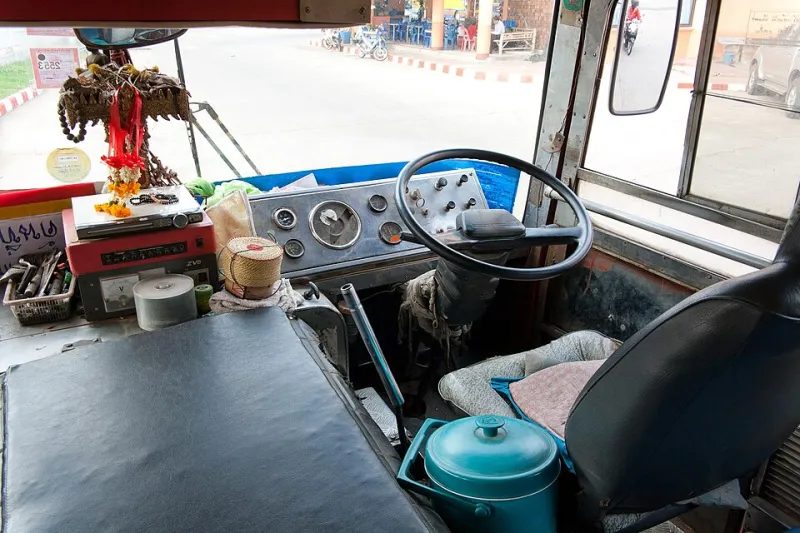
Photo: Ilya Plekhanov, CC BY-SA 3.0, via Wikimedia Commons
It’s 8.47 on a Tuesday in November. The windscreen is iced, the heater is making that clicky noise, and the front seat of the 555 is already warm from the engine. Outside, a field of sheep is doing its best to look dramatic in the mist. Inside, a woman in a bobble hat is unwrapping a flapjack. Nobody is talking about the plot. There isn’t one. That’s the point.
A rural bus is a cinema. The screen is the window. The soundtrack is the engine, the indicator tick and the occasional gasp from the passenger behind you as a pheasant makes a poor life choice. The ticket is cheaper than a small popcorn. And the film changes every ten minutes: a stone bridge, a steamed-up pub, a river doing its best impression of dry ice. If you’re looking for a feel-good winter outing that costs less than a round, this is it.
The route that turns a school run into a nature documentary
Start in Cumbria with the 555 between Keswick and Kendal. In winter, this is not a tourist bus. It’s a lifeline with a view. You get the fells stacked up like folded blankets, the lakes looking steely and serious, and villages that appear out of the frost like someone’s just turned the telly on. The bit around Grasmere and Rydal Water is the big-budget sequence. The bit where a farmer waves at the driver is the bit that makes you want to move here.
'You get people who ride it just for the ride,' says Mark, a driver on the route. 'They sit at the front, take a flask out, and get off at the same place they got on. I think it’s brilliant.' He’s right. The front nearside seat — left as you face forward — gives you the best angle on the water. The front offside gives you the drystone walls and the occasional startled sheep. Choose your own adventure.
The dales bus that comes with a pub stop
Then there’s the 875 through the Yorkshire Dales, the kind of route that makes you forget the word 'commute'. Leeds to Hawes is a proper day out: city streets, then Ilkley Moor, then Skipton, then the long, slow climb into the dales. In winter the light is low and golden, and every village looks like it’s been designed for a Christmas advert. The bus is warm. The views are ridiculous. The fare is about the price of a coffee.
Regulars know the drill. Sit upstairs if it’s a double-decker — front row, left side for the valley, right side for the hills. Get off at a village with a pub, have a bowl of soup, and catch the next one back. 'It’s the cheapest day out I know,' one passenger tells me, tucking into a bag of minstrels. 'And you don’t have to find a car park.' That’s the other thing: no parking, no petrol, no arguing about the satnav. Just a day ticket and a window.
The coast route where the sea does the special effects
For something wilder, take the T5 from Aberystwyth down towards Cardigan. This is a bus that hugs the coast, dips into towns, and gives you the full Welsh weather experience — rain, sun, rainbow, hail, all within twenty minutes. In winter the sea is a moody grey-green, the beaches are empty, and the light does that thing where it looks like someone’s holding a torch behind a curtain. It’s not a gentle film. It’s a drama. Bring a scarf.
The beauty of these routes is that they’re not attractions. They’re buses. They run because people need them: schoolkids, shoppers, farmers, people going to the doctors. That’s what makes them feel like a secret. You’re not on a tour. You’re in the middle of ordinary life, and ordinary life in rural Britain is often stunning.
How to do it properly
Go mid-morning. The 9am school run is busy and loud; the 10.15 is calmer, and you’ve got a better chance of the front seat. Check the winter timetable before you go — rural routes can be sparse on Sundays — and use a day ticket if you’re doing a there-and-back. Bustimes.org is your friend. Take a flask. Take a scarf. Take headphones if you want, but honestly, the engine noise is part of the charm.
Sit as far forward as you can. Upstairs front is the director’s chair. Downstairs front is the front row of a very small, very warm theatre. Ask the driver which side has the best view — they know. And don’t rush back. The best bit is often the return journey, when the light goes blue and the windows steam up and someone falls asleep against the glass.
A cinema ticket costs a tenner. A rural bus day ticket can cost about two quid, depending on where you are and what deal the operator’s running. Even at the capped fare, it’s less than a pint. And you get frosty fields, village pubs, steam off the river and a driver who knows everyone’s stop. The film changes every time. No adverts. No trailers. Just you, the front seat, and Britain doing its thing out of the window. That’s the culture crawl. That’s the feel-good find. That’s winter sorted.