The Station Piano Is the Best Five Minutes of Your Commute
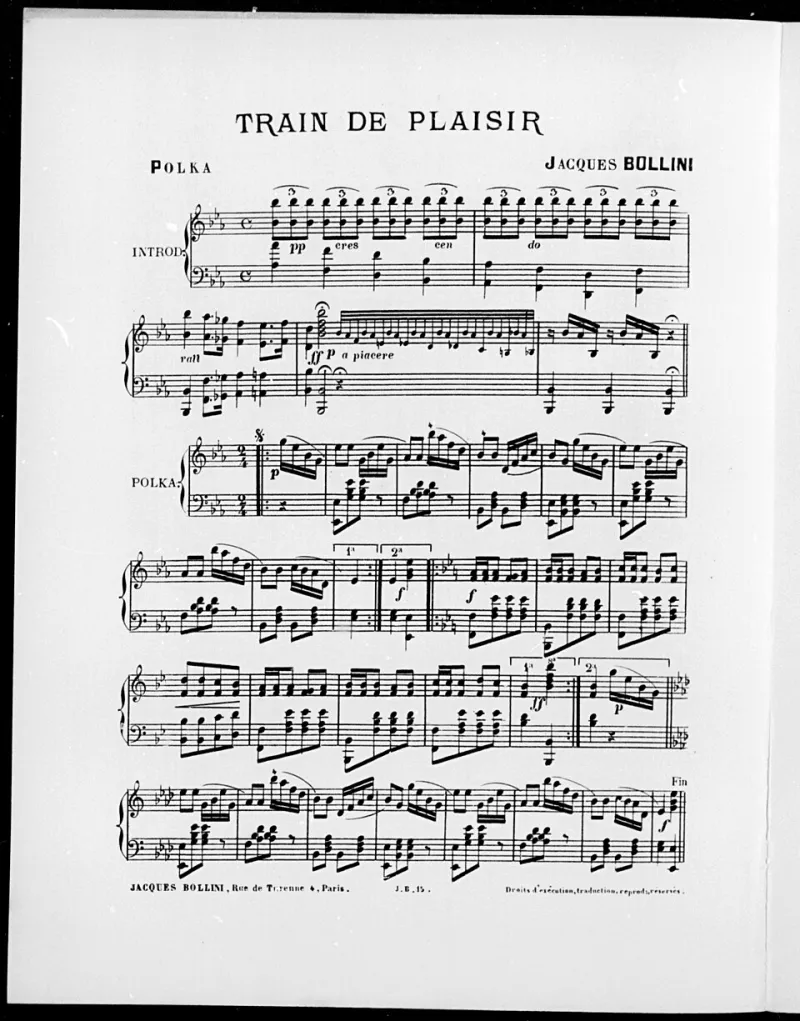
Photo: Bollini, Jacques (18..-1921). Compositeur, Public domain, via Wikimedia Commons
There’s a particular sound that cuts through a busy station concourse: not the tannoy, not the announcement about the 17:42, but someone sitting down at a battered upright and playing something soft. A few people slow down. A toddler stops mid-tantrum. A commuter with two bags and a face like thunder turns their head. For about five minutes, the whole place feels less like a transport hub and more like a living room with terrible acoustics and a very good playlist.
That’s the quiet magic of Britain’s street pianos. They turn up in stations, market squares, parks and shopping centres, usually painted bright colours, often slightly out of tune, and almost always free for anyone to use. The idea has been drifting around since the late 2000s, when Luke Jerram’s Play Me, I’m Yours project placed pianos in public spaces around the world. Britain took to them enthusiastically. Today they’re less of a novelty and more of a small civic tradition — a piano-shaped invitation to stop being a stranger for a minute.
Why a public piano beats your headphones
Commuting is full of rules. Stand on the right, have your ticket ready, don’t make eye contact, definitely don’t speak. A public piano breaks all of that without anyone having to organise a team-building day. It’s a shared moment with no booking fee and no dress code. You might hear a teenager hammering out a video-game theme, a pensioner playing a tune from 1962, or someone who clearly hasn’t touched a keyboard since school cautiously picking out ‘Chopsticks’. All of it counts as culture. None of it is algorithm-approved. That’s the appeal.
It’s also a reminder that talent is not the same thing as permission. You don’t have to be good to sit down. You just have to be willing to make a bit of noise in public. In a country that often treats public space as something to be hurried through, that’s quietly radical.
Three routes for a piano-spotting afternoon
You don’t need to turn this into a full-time hobby. A loose route works best. Start with the big stations: London St Pancras, King’s Cross, Manchester Piccadilly, Leeds, Birmingham New Street, Glasgow Central, Cardiff Central, Bristol Temple Meads and Newcastle all have form for hosting pianos at some point. They move around, so check station websites and local arts listings before you set off. The fun is in the hunt as much as the playing.
Then head for a market square. Leeds, Norwich, Bristol, Nottingham and Sheffield all have public spaces where pianos have popped up for festivals and weekend events. Look for a painted upright near a bench, usually with a stool attached by a chain and a small sign inviting you to play. If the keys are covered, ask the nearest trader or venue staff if it’s open to the public. Most of the time, it is.
Finish somewhere green. Parks in Cardiff, Glasgow and Sheffield have hosted temporary pianos in warmer months, and seaside towns sometimes wheel one out for a summer weekend. Treat it as a bonus, not a guarantee. The joy of a street piano is that it’s a bit ad hoc. If you find one, you’ve won the culture lottery for the day.
The unwritten rules of a public plonk
Nobody hands you a rulebook with the stool. But there is a general code, and it’s mostly about common sense and not being the person who ruins it for everyone else.
Wait your turn. If someone is playing, don’t hover over them like a referee. Give them space. If they’re mid-piece, let them finish. The piano isn’t going anywhere, even if your train is.
Two songs or ten minutes, not a full recital. If there’s a queue, read the room. Play your piece, enjoy the applause, then offer the stool to the next person. The best public pianists are generous with the instrument.
Treat the piano like a borrowed book. Don’t put your coffee on the lid. Don’t slam the fallboard. Don’t let your child bang the keys with a toy. It’s there for everyone, which means it’s yours to use, not yours to wreck.
All levels welcome. Mistakes are fine. Wrong notes are fine. Playing the same four bars over and over while you work out the next bit is fine. This isn’t a conservatoire exam. It’s a Tuesday.
Ask before filming. A quick photo of the piano is one thing. Filming a stranger’s face and posting it without asking is another. If a child is playing, always check with the adult first.
Leave it as you found it. Stool tucked in, lid down if that’s how it was, no sheet music left behind unless there’s a spot for it. Small kindnesses keep the pianos around longer.
What to play when you haven’t played in years
The answer is: anything. ‘Chopsticks’ is allowed. So is the theme from a film you half-remember. So is one hand only. If you’re feeling brave, try a slow, simple version of a song everyone knows — something by Oasis, perhaps, or a Beatles tune, or the first thing you learned as a kid. The point is not to impress. The point is to join in.
And if you’re a listener, don’t crowd. A loose semicircle is the correct shape. Clap at the end. Smile at the player. Don’t offer unsolicited feedback unless you’re invited. The best audiences for a street piano are the ones that treat it like a tiny village hall concert: warm, curious and not too close.
The five-minute holiday
A public piano doesn’t solve the housing crisis or fix the trains. It doesn’t need to. It just gives you a small, unexpected pause in a day that was otherwise heading straight from A to B. For the person playing, it’s a moment of being seen. For everyone else, it’s proof that the person next to you on the escalator might have something lovely in them after all.
So next time you hear keys in a concourse, don’t rush past. Follow the sound. Stand for a minute. If the stool is free and you fancy it, sit down. You don’t need to be good. You just need to stop.