One Book In, One Book Out: Britain's Phone Box Libraries Are the Cheapest Culture Crawl Going
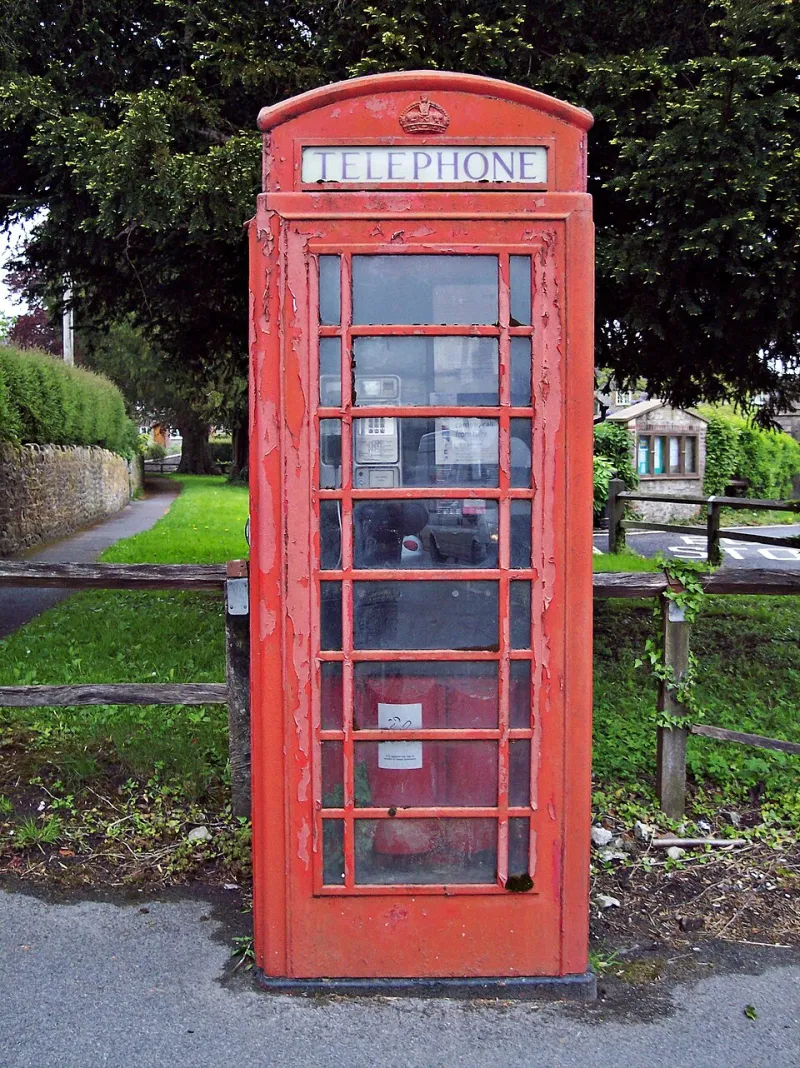
Photo: John Potts , CC BY-SA 2.0, via Wikimedia Commons
There is a small red box at the edge of a village near you that has stopped ringing. It has started reading instead.
You've almost certainly walked past one without registering it — that familiar silhouette by the green, or at the crossroads where the bus stops, a bit weathered, a bit leaning. Look through the glass and you'll find a shelf. The shelf has books on it. The books are free.
In November, when the light gives up somewhere around half four and everything that costs money starts looking like a commitment, a box like this is about as good as a day out gets. No booking fee. No queue. No app. Just a door that sticks slightly and a paperback someone else has already loved.
From dial tone to dog-eared paperback
The classic K6 kiosk is one of the great bits of British street furniture, and there are still plenty of them about — partly because BT's Adopt a Kiosk scheme lets communities take one on for £1 and do something useful with it. Thousands of boxes have been saved that way, and once a village has one, it tends to get creative.
The one generally credited with starting the bookish trend is in Westbury-sub-Mendip in Somerset, where villagers turned their box into a book exchange back in 2009. It's still going, still stuffed, still the template everyone else copies.
What's changed by 2026 is that the novelty has properly worn off — which is exactly what you want. These boxes aren't quirky anymore. They're infrastructure, like a bench or a bus stop or a decent handrail. They've stopped being a story and become a habit.
What you'll actually find inside
The book box. A shelf, occasionally two, a bit of damp-proofing and the particular smell of paper that has spent a fortnight in a cold glass room. The mix skews towards thrillers, cookbooks and a genuinely baffling quantity of 1970s gardening manuals, but every box has one wildcard — a hardback someone liked enough to want to pass on.
The seed swap. Instead of spines, little envelopes: runner beans, nasturtiums, sweet peas, all labelled in biro with the year and a hopeful note about germination. Seed boxes have taken root from Yorkshire to Wiltshire, and they run entirely on trust, which is the whole charm.
The mini gallery. A few boxes have been given over to local artists and photographers, with a new show every month or so and an honesty box taped to the shelf. Twenty seconds of art, no gift shop.
The noticeboard. Possibly the most underrated of the lot. A sheet of A4 for a Christmas fair, a lost cat, a ukulele group seeking a fourth, a rota for the church flowers. It's the village's entire social life behind one pane of glass.
The defibrillator box. Not a library, but worth mentioning, because a fair few red boxes now hold something considerably more important than a Dan Brown. If yours does, learn where it is.
The rules nobody wrote down
There's no committee, no card, no membership. There is, however, an etiquette, and it is policed silently and without mercy.
- One in, one out. The shelf should be roughly as full when you leave as when you arrived. Taking three and leaving nothing is how these things die.
- Dry books only. No mould, no rippled pages, no mystery damp. The boxes are not watertight and everyone knows it.
- Leave the good stuff. This isn't a skip with a door on it. If you wouldn't give it to a friend, don't give it to a village.
- No flyering. Though tucking a handwritten recommendation card inside a book you've enjoyed is quietly encouraged.
- Close the door properly. It doesn't look like it does anything. It does everything.
- Don't clear the lot. Resellers do turn up. Don't be a reseller.
- Tidy as you go. Straighten the shelf. Turn the spines out. It takes eight seconds.
How to build a free culture crawl
Three or four villages, one afternoon, roughly zero pounds spent. Here's how to make it a proper outing rather than a single disappointing stop.
Pick a route, not a destination. Phone box libraries cluster where parish councils are energetic, so aim for a loop of villages three to five miles apart. Satellite view is your friend: the red square is easy to spot from above. Searching "phone box library" plus your county will usually turn up a list someone has lovingly maintained.
Start early. In November you've got maybe six usable hours of daylight, and half of the pleasure is actually seeing the books rather than squinting at them by torchlight.
Pack properly. One book to leave, one spare in case you find a box that's oddly empty, a flask, and a torch for the last stretch.
Read the noticeboards. They're half the culture on offer. A village hall film night, a repair café, a carol service — it's the cheapest listings magazine in Britain and it's updated weekly.
Finish somewhere warm. A pub with a fireside corner, a café that doesn't mind a damp coat, a chippy. The crawl should end sitting down.
Three boxes worth a walk
The original. Westbury-sub-Mendip, Somerset. Still running, still worth the detour, still the standard everyone else is measured against.
The seed box. Any village where the shelves are full of envelopes rather than spines. Bring a pen and a few spare packets from your own garden; you'll be treated like a returning hero.
The gallery box. Small, strange, often genuinely good. Check local arts listings for whichever one is nearest you, and go before the show changes.
Why they feel more welcoming than ever
Because nothing is being asked of you. No account to make, no ticket to scan, no table to book, no algorithm deciding what you're allowed to see next. You open a door, you look at some books, you take one, you leave one, you close the door.
The light comes through the glass at three in the afternoon and lands on a paperback with someone else's name in the front. The village beyond the box carries on with its leaf-sweeping and its church notices. It costs nothing, it belongs to everybody, and it is 400 yards from your front door.
Next dry Saturday, take a book you've finished and go and find one. That's the whole plan.