Bring Your Broken Toaster: The Sunday Morning Where Nothing Gets Thrown Away
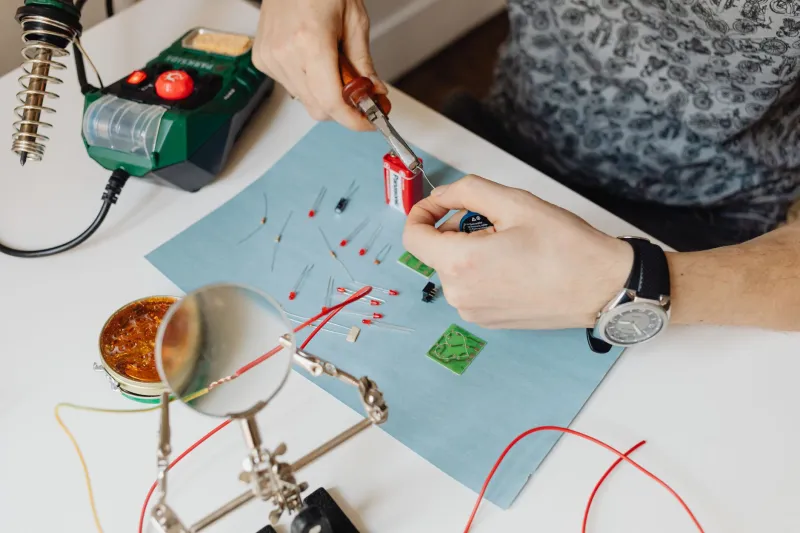
There's a particular sound you hear when you walk into a repair café for the first time. Not silence — the opposite. A low hum of chat, the tick of a soldering iron warming up, someone laughing at a joke about a fuse, and underneath it all the gentle clatter of biscuit tin lids. It smells faintly of coffee and warm dust, because someone has always just opened up a hoover to see what's rattling inside.
And there is always a queue. Not a stressful queue. A queue of people holding things: a toaster in a carrier bag, a bedside lamp under one arm, a coat with a broken zip draped over a shoulder like a sleeping pet. They come in, they get a number, they get a cup of tea, and they sit down to wait for a stranger to have a look.
So what actually is a repair café?
The idea is almost embarrassingly simple. You take a derelict item along, volunteers with tools and know-how sit down with you, and you try to fix it together. No charge for the fixing. No lecture about landfill. No judgement about the fact that you've owned this lamp for eleven years and never once changed the plug.
The movement began in Amsterdam back in 2009 and travelled — as good ideas tend to — through church halls, libraries, allotment huts and community centres across Europe. Britain now has a thriving patchwork of them, run by everyone from climate groups to parish councils to a retired engineer called Dave who simply enjoys the company.
Most sessions run monthly, usually on a Saturday or Sunday morning. You'll find them in village halls, scout huts, church rooms, sometimes a corner of a library. They run for a couple of hours, they're free, and they ask for a donation if you can manage it — because solder, fuses and sewing thread don't buy themselves.
What can you bring?
The honest answer: more than you'd think, but less than you'd hope.
Very welcome: kettles, lamps, toasters, radios, hairdryers, small fans, sewing machines (if you can carry them), hoovers with a simple fault. Clothes with split seams or missing buttons. Bikes needing brakes, gears or a wobbly wheel sorting. Wooden toys, doll's houses, small furniture. Broken jewellery. Garden tools that need a new handle.
Usually turned away: anything with serious safety implications — microwaves are often a no-go, and anything with a visibly damaged mains cable or signs of burning will be politely declined. Big white goods, obviously. And phones and laptops can be hit and miss, depending on whether anyone there fancies their chances with a tiny screwdriver and a lot of hope.
The one rule worth remembering: you stay with your item. This isn't a drop-off service. The whole point is that you watch, you ask questions and you learn what's actually inside the thing. Half the volunteers will happily explain what a thermal fuse does. All of them will happily explain it twice.
The people doing the mending
Here's the thing nobody tells you about repair cafés: the volunteers are the attraction.
You get retired electricians who miss the workshop. You get sewists who can turn a torn hem into a piece of invisible magic in four minutes. You get teenagers learning to strip a wire under supervision, and people who've been coming for three years and have quietly become the person everyone asks about bicycle gears.
They're not miracle workers and they'll say so. Sometimes the part isn't made any more. Sometimes the fault is terminal, and the honest verdict is "this one's had a good innings." But even then you leave with something — a diagnosis, an explanation, and usually a recommendation for the bloke on the high street who might have the bit you need.
Things to know before you go
- Check the date and the opening hours first. Many sessions run once a month and some pause over the summer.
- Arrive early. The queue builds, and the last hour gets busy.
- Bring the whole thing, plus any bits. The screw you took out and put in a saucer? Bring the saucer.
- Label your stuff. Genuinely — cafés end up with three identical black lamps and a lot of confusion.
- Be ready to be honest about the fault. "It just stopped" is fine, but "it made a buzzing noise then the lights flickered" gets you much further.
- Take cash for the donation tin. And for the raffle, if they're running one, which they usually are.
How to find your nearest one
Start with a web search for "repair café" plus your town, then widen it to the nearest big town — most people travel fifteen or twenty minutes for a good session. Community noticeboards, library foyers and local Facebook groups are surprisingly effective too, because these things spread by word of mouth far more than by advertising. The Restart Project and Repair Café Wales both keep listings, and a quick look at your council's sustainability pages often turns up something.
Why it feels like the most generous Sunday out there
There's a moment that happens about forty minutes in. Someone's kettle clicks back to life, the little orange light comes on, and the whole table looks up. The owner laughs — properly laughs — and says something like "well, I was going to buy a new one." And that's it. That's the whole thing.
You've saved a fiver, maybe thirty quid, maybe nothing at all. But you've also sat at a table with six strangers for an hour, learned what a thermal fuse is, eaten two custard creams and had a conversation with a man called Ron about the merits of an old Morphy Richards. You've kept something out of a skip and you've watched a volunteer look genuinely pleased with themselves.
For a Sunday morning, that's a lot. Take something broken. See what happens.